

Becoming More Fully Ourselves
Why healthy relationships deepen our individuality rather than diminish it.

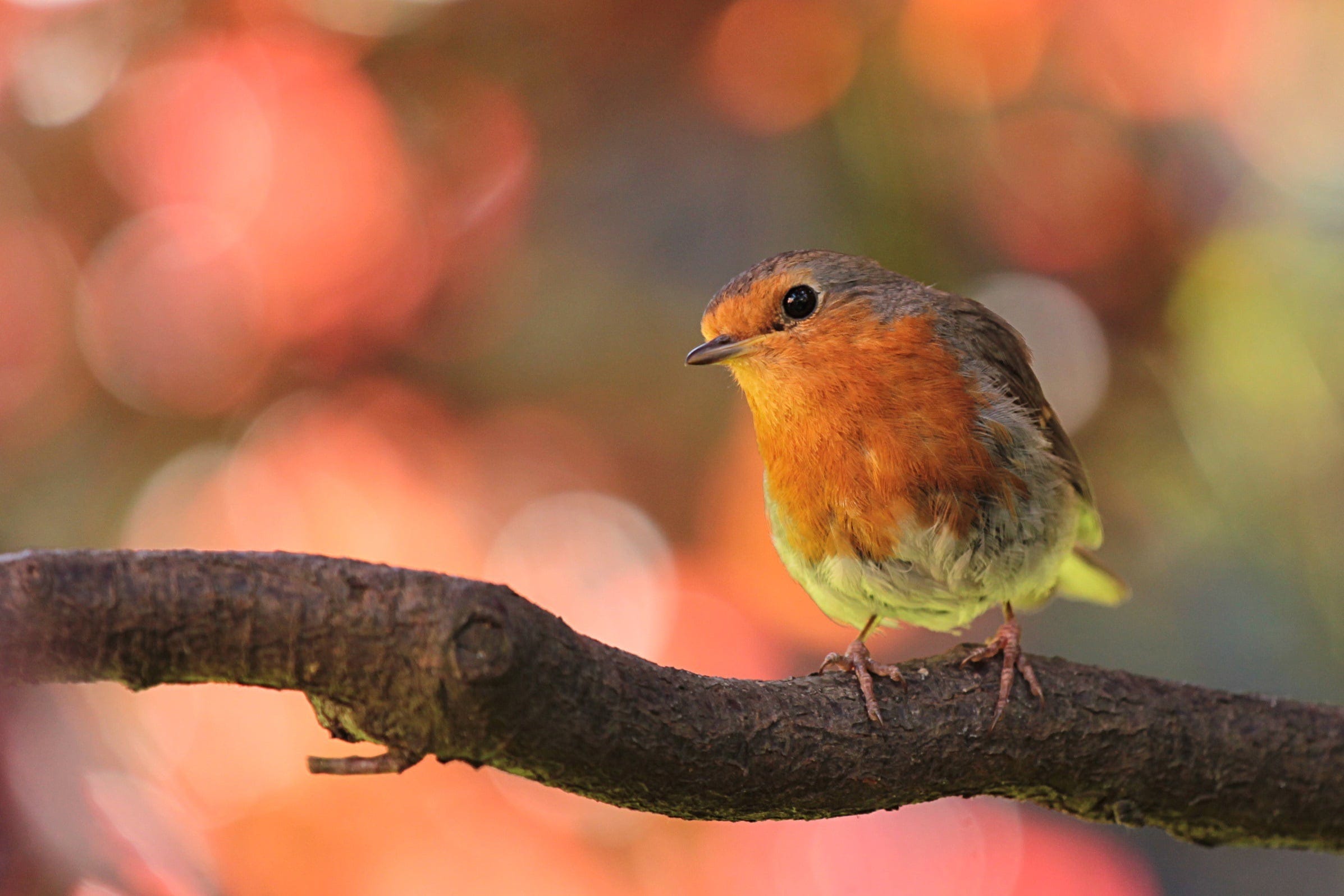
Photo by Oldiefan via Pixabay
For more than twenty-five years, one quiet question has accompanied my work—and my life.
How do we recognize what is truly ours?
Not simply a belief we’ve inherited, an expectation we’ve absorbed, or an identity we’ve learned to perform.
But something that has arisen from a deeper place—through the body, dreams, the living world, love and loss, and years of paying attention.
Much of what matters in life does not arrive demanding our attention.
It waits quietly to be noticed.
Like a bird pausing on a branch before it sings.
Often, the body whispers before the mind understands.
Dreams return with the same images until we are ready to receive them.
The living world invites us into a slower conversation.
Paying attention is not passive. It asks for patience and courage.
Because the deeper we attend to our own experience, the more likely we are to discover that some of what we have inherited no longer fits.
Sometimes we outgrow an old identity or discover that a path which once nourished us no longer carries the same life.
What most deeply changes us is rarely another insight.
It is a different way of listening: to ourselves, to the body, to dreams, to grief, to imagination, to the living world, and to the quiet questions that refuse to leave us alone.
Over time, another question began to emerge.
How do we remain faithful to what is truly ours while living deeply in relationship with others?
We do not become ourselves in isolation. We are shaped by families, friendships, communities, teachers, workplaces, spiritual traditions, therapeutic relationships, and cultures that nourish us in both visible and invisible ways.
Relationship is one of the primary ways we become human.
And this is where the paradox begins.
The deepest purpose of relationship is not agreement.
It is differentiation.
Differentiation does not mean separation.
It means becoming more fully ourselves while remaining capable of deep relationship.
In fact, healthy intimacy depends upon it.
Love does not ask us to become the same.
Healthy relationships create the conditions in which each person can become more fully themselves while remaining deeply connected to others.
They make room for both belonging and uniqueness.
They recognize that these are not opposites.
The natural world has always understood this. A healthy ecosystem depends upon diversity. Each species occupies its own niche. Each contributes something unique that no other can. A forest is resilient precisely because every tree, bird, fungus, stream, and stone participates in its own way.
The beauty of the whole depends upon the uniqueness of each part.
Human communities are not so different.
Our greatest strength does not come from sameness.
It comes from each person bringing the gifts that only they can offer.
Years ago, while writing Wild Yoga, I devoted an entire chapter to what I called “Play Your Part in the Symphony.” The image has stayed with me ever since.
A symphony does not ask every instrument to become a violin. The oboe, cello, trumpet, flute, and drum each have their own voice. The music becomes beautiful because each remains faithful to its own sound.
The same is true of human communities. The deepest purpose of community is not conformity. It is to create the conditions where each person’s unique note can emerge.
Yet the very places that help us discover ourselves can, at times, begin pulling us away from ourselves.
This rarely happens dramatically. It seldom begins with force. More often, it unfolds through love, admiration, shared purpose, and the deeply human longing to belong.
Gradually, almost imperceptibly, we begin trusting someone else’s interpretation of our experience more than our own.
We override a hesitation.
We dismiss an intuition.
We explain away the quiet voice inside us that says,
“Something isn’t quite right.”
Sometimes we stay because we fear disappointing someone we love or losing community. Sometimes because we confuse loyalty with love.
Discernment is the willingness to remain in honest relationship with our own experience.
To notice what repeatedly calls for our attention.
To become curious about what brings greater aliveness—and what slowly diminishes it.
To trust that genuine growth never requires abandoning our humanity, our perception, or our capacity to question.
Healthy relationships deepen our individuality. They do not replace our inner authority.
Healthy teachers are not trying to create followers. They help people trust their own deepest knowing.
Healthy communities cultivate an ecology where many different ways of being can flourish. Like healthy ecosystems, they become more resilient because of their diversity, not despite it.
The older I become, the less interested I am in certainty.
I find myself becoming more interested in fidelity.
Can I remain faithful to what feels quietly, deeply true, even before I can fully explain it?
Can I trust what keeps returning?
Perhaps this is why I continue to return to dreams, wilderness, the body, and the soul.
Because they invite relationship.
They remind me that life is less interested in telling us who to become than in inviting us into an ever-deepening conversation with who we already are.
Perhaps the deepest purpose of any relationship, community, teacher, or guide is not to shape us into a particular vision, mission, or identity.
Perhaps it is to help us become more fully who we already are.
To hear our own note.
To trust it.
And then to offer it back to the world.
Perhaps we recognize a healthy relationship or community not by how closely we fit, but by whether we leave with a deeper capacity to trust our own deepest knowing—and to offer our unique gifts back to the world.
Because the symphony of life needs every voice.
Not one voice repeated many times.
But each of us, becoming more fully ourselves.
A Note
This week I’ll be presenting at the 2026 Annual International Cultic Studies Association Conference on Soft Coercion in Transformational Communities: Ecological and Psychological Patterns of Control.
Although the setting is specific, the questions feel universal to me.
How do we create relationships and communities that support growth without diminishing autonomy?
How do we encourage transformation without asking people to override their own deepest knowing?
These are not only questions for transformational organizations. They are questions for therapists, teachers, leaders, parents, partners, friends—and for every community that hopes to nurture human flourishing.
The older I become, the less interested I am in certainty.
I love this Rebecca and in a strange way certainty is less interested in me.
I find myself becoming more interested in fidelity.
I never considered “fidelity “ in regard to “ being true to one’s relationships or promises “. It opens me up to possibilities.
Can I remain faithful to what feels quietly, deeply true, even before I can fully explain it?
This question stirs something in me. What would it take to be so faithful to a mysterious feeling that is quite deep and true? I am on the threshold of uncertainty and the next step will take much fidelity.
Can I trust what keeps returning?
I have been defining and seeking understanding of the images and mythopoetic beings for some time now, and trusting them may afford me the opportunity to perhaps metabolize and embrace that which has been patiently waiting for me.
“ Healthy teachers are not trying to create followers. They help people trust their own deepest knowing.”
I appreciate the courage a “ healthy teacher” is required to embody in a world where most are seeking certainty and safety. You and other Animas guides have modeled that for me and that is how I want to be known someday.
So much here. Thank you🙏
The older I become, the less interested I am in certainty.
I love this Rebecca and in a strange way certainty is less interested in me.
I find myself becoming more interested in fidelity.
I never considered “fidelity “ in regard to “ being true to one’s relationships or promises “. It opens me up to possibilities.
Can I remain faithful to what feels quietly, deeply true, even before I can fully explain it?
This question stirs something in me. What would it take to be so faithful to a mysterious feeling that is quite deep and true? I am on the threshold of uncertainty and the next step will take much fidelity.
Can I trust what keeps returning?
I have been defining and seeking understanding of the images and mythopoetic beings for some time now, and trusting them may afford me the opportunity to perhaps metabolize and embrace that which has been patiently waiting for me.
“ Healthy teachers are not trying to create followers. They help people trust their own deepest knowing.”
I appreciate the courage a “ healthy teacher” is required to embody in a world where most are seeking certainty and safety. You and other Animas guides have modeled that for me and that is how I want to be known someday.
So much here. Thank you🙏